Making Peace with the American Grocery Store: Your International Kitchen, Adapted
The Grief Is Real, and It's Okay to Name It
Let's start here, because nobody else seems to want to: there is something genuinely sad about coming home from a trip and realizing that the food you ate there — the stuff that felt like it changed your entire relationship with eating — is not reproducible in your kitchen. Not really. Not the way it was.
The khao soi in Chiang Mai. The shakshuka at that tiny spot in Tel Aviv. The cacio e pepe that made you question everything you thought you knew about pasta. You watched people make it look simple. You wrote down the ingredients. You were so sure.
And then you got home to the suburbs of Columbus or Denver or wherever, and you found out that galangal is not the same as ginger, that American parmesan is a different product entirely, and that the dried chiles at your local store are fine but they are not those chiles.
This piece isn't going to tell you that you can recreate everything perfectly with the right substitutions. That would be a lie. But there's a genuinely satisfying middle ground between "authentic recreation" and "giving up entirely," and finding it is one of the better skills you can develop as someone who travels and eats with intention.
Building a Pantry That Honors Where You've Been
The smartest thing you can do when you get home from a trip is to shop before the inspiration fades. Not for a specific recipe — for a foundation.
Most international cuisines share a logic: a fat, an acid, an aromatic base, a heat element, and a finishing flavor. If you can stock versions of those components from the cuisines you love, you can improvise in ways that feel genuinely connected to what you experienced, even if no individual dish is a perfect copy.
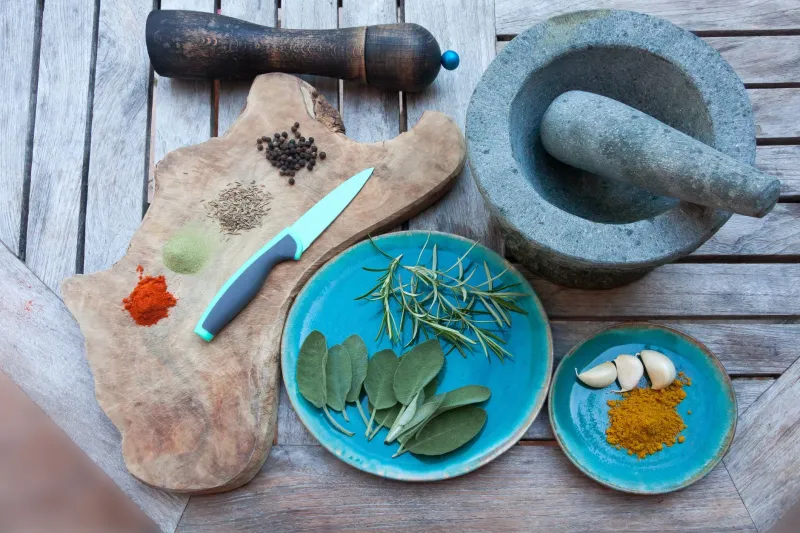
For Southeast Asian cooking, that might mean fish sauce, coconut milk, lemongrass paste (the tubes in the produce section are underrated), lime, and a good sambal. For North African food: preserved lemons, harissa, cumin, coriander, and canned chickpeas. For Mexican cooking beyond Tex-Mex: dried anchos and guajillos, Mexican oregano (different from Italian, worth seeking out), and good lard if you eat it.
These aren't exotic purchases. Most are available at a decent grocery store, all of them at international markets, and many online. The point is to stop shopping dish-by-dish and start building a pantry that reflects your actual taste.
When to Substitute and When to Accept the Loss
Not every substitution is a compromise. Some are genuine improvements, or at least lateral moves that produce something worth eating even if it's not identical to the original.
Swapping kaffir lime leaves for a combination of lime zest and a bay leaf in a Thai curry? Imperfect, but workable. Using Greek yogurt where labneh is called for? Usually fine. Replacing tamarind paste with a mixture of lime juice and a little brown sugar? It's not the same, but it gets you closer than skipping it entirely.
But there are some things you should just accept you cannot replicate. The water is different. The humidity affects how dough behaves. The produce ripened under a different sun. The vendor who made that dish has thirty years of muscle memory you don't have. Some flavors exist in context — in the heat, the noise, the fact that you were hungry and happy and somewhere new.
That's not a reason to stop cooking. It's a reason to stop grading yourself against an impossible standard.
Finding Actual International Ingredients in the US
If you live in or near a city, you have more access than you think. Most mid-sized American cities have at least one Asian grocery store, one Latin market, and one Middle Eastern or Indian grocery — and these places are where you'll find ingredients that a standard supermarket won't carry.
For anything else: Kalustyan's ships nationally. So does Rancho Gordo (for heirloom beans). Diaspora Co. has spices sourced directly from farmers. Amazon, for all its problems, has made tamarind concentrate and dried shrimp paste accessible to people living in places that haven't caught up yet.
Also worth doing: make friends with people who cook from the cuisines you love. This sounds obvious, but it's genuinely the fastest way to learn what's actually essential versus what's nice to have, and where to find it. Community Facebook groups for specific cultural communities in your city are an underused resource here.
The Emotional Part Nobody Prepares You For
Cooking a dish you first ate abroad isn't just about flavor. It's a form of memory retrieval. You're trying to get back to a feeling as much as a taste, and sometimes the kitchen becomes the place where you realize how much you miss wherever you were.
That's worth acknowledging rather than pushing through. Cooking a version of something you loved in another country can be a beautiful act of honoring that experience. It doesn't have to be perfect to be meaningful. In fact, some of the most interesting home cooking happens in the gap between what you're trying to make and what you actually have to work with.
Your version of that dish is its own thing now. It has your kitchen, your pantry limitations, your adjustments, your memory of the original folded into it. That's not a lesser version. It's a personal one.
A Few Things Worth Knowing Before You Start
- Taste as you go. International recipes often assume ingredients with more intensity than their American equivalents. You may need more of something, or less.
- Don't skip the fat. A lot of the flavor you remember from restaurant cooking abroad comes from oil, lard, ghee, or coconut fat used generously. Home cooks often under-fat and wonder why things taste flat.
- Salt differently. Fish sauce, miso, soy sauce, and preserved lemons all salt a dish differently than table salt. Learn how each one behaves before you add more.
- Let go of the photo. The dish you're making probably won't look like the one you remember. Cook for taste, not presentation, and you'll stress less.
Your kitchen can hold more of the world than you think. It just might look a little different than the original.