Table for One, and That's Fine: Learning to Eat Alone Without the Apology
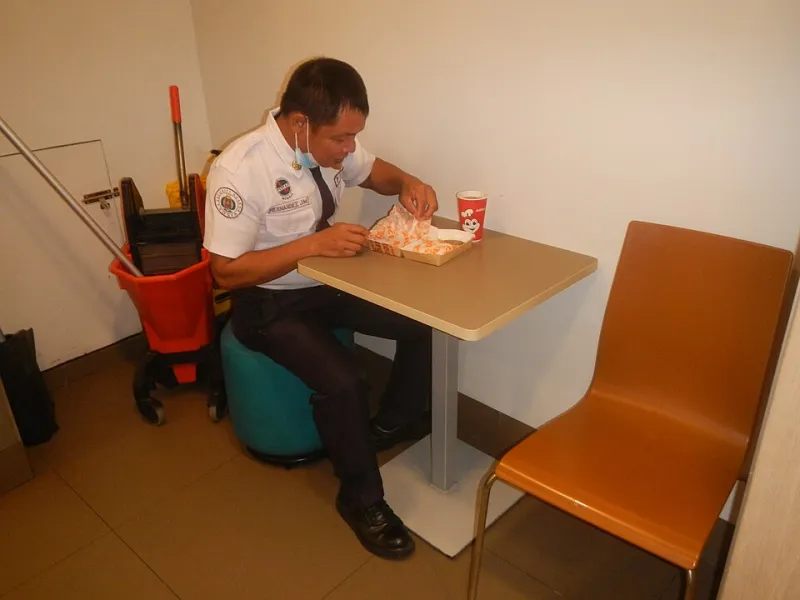
Photo: Judgefloro, CC0, via Wikimedia Commons
The first time I ate alone in a restaurant on purpose, I asked for a table near the kitchen door. Not because I like the draft. Because I wanted to be easy to ignore.
I ordered something I could eat quickly, kept my phone face-up like a shield, and did the thing a lot of us do: performed being fine. Checked the time. Checked it again. Calculated how long was long enough to seem normal before asking for the check.
That was years ago. I still remember the pasta. I don't remember a single thing about the person at the next table, which is the first clue that the entire ordeal was happening almost entirely in my head.
The part that actually makes it hard
It is not loneliness. I have been lonely in groups of eight and perfectly content at a counter with a bowl of noodles and nobody to talk to.
The hard part is visibility. Sitting alone in public feels like an announcement, and we've been trained to read that announcement as 'something went wrong.' We assume a table for one means a canceled plan, a fight, a person to feel sorry for. Or worse, we assume everyone is currently judging our posture.
Here is the unglamorous truth: nobody is looking. The server is thinking about the six-top in the corner. The couple next to you is having their own tense conversation about whose turn it is to call their mother. You are a background detail in somebody else's dinner, exactly the way they are in yours.
Start where it's cheap to fail
You don't begin with a candlelit dinner for one in a city you don't know. You begin in places where the format does half the work for you.
The lunch counter. A stool at a window, a taqueria with a line, a ramen bar, a diner with laminated menus. Counter seating is the training wheels of solo dining because it removes the empty-chair problem entirely — there is no chair across from you to feel weird about.
Hotel breakfast. This is the most forgiving restaurant in the world. Everyone is in a slightly rumpled state, half the room is on a laptop, and nobody will remember you were there.
The coffee shop at an off hour. Ten in the morning or three in the afternoon, when the room is half-empty and the staff are resetting. Order something small. Stay twenty minutes.
Takeout, eaten in public. A bench, a park, a waterfront. You're technically eating alone and technically not in a restaurant, and the whole thing costs six dollars.
Each rung is a little more exposed than the last. That's the point. You don't have to leap to the top.
The small rules I made for myself
No phone as a pacifier for the whole meal. I'll allow it while I order, then it goes face-down. Not because phones are evil — I'm not that person — but because the phone was how I was avoiding being where I was.
Order one thing I actually want, not the fastest thing on the menu. The whole quiet pleasure of eating alone is that there's no negotiation. Nobody's splitting. Nobody's suggesting the other place. That's not a consolation prize; that's the entire benefit.
Stay one course longer than feels necessary. Dessert, or a second coffee. The discomfort peaks early and then dissolves, and you only find that out by staying.
Tip normally and leave when I want to. Not when I've calculated the socially acceptable minimum.
What it actually gives you
A pace. That's the thing I didn't expect. When you eat with people, the meal runs on a shared clock — somebody's hungry early, somebody talks through the check. Alone, lunch takes exactly as long as lunch takes, and you can hear your own thoughts in the gap. I've had better ideas at a solo lunch than in most meetings.
It also makes you a better traveler. The friend who needs a group decision for every meal is the friend who ends up eating a mediocre sandwich because it was the only option nobody vetoed. Once you can walk into a place by yourself, a whole city opens up. You can eat at 4 p.m. or 10 p.m. You can eat the thing on the menu that scares you. You can leave after one drink.
And there's the practice of it. Being alone in public without a buffer is a small, repeatable act of self-sufficiency. It makes the world feel slightly less like a place where you need an escort to be legitimate.
When it isn't the right move
I'm not going to sell you the fantasy that every solo meal is transcendent. Some nights you want company and the emptiness is real. Some places are genuinely built for groups — the boisterous Italian spot with the big tables — and sitting there alone feels less like confidence and more like a bit.
Read the room. Then trust yourself. There's no prize for suffering through a five-course tasting menu alone to prove a point.
Start this week
Not abroad, not on some solo trip you're already romanticizing. Home is fine. Go to lunch alone on a Saturday, sit at the counter, order the thing you want, and stay for twenty-five minutes. It'll be awkward for the first six. Then it'll just be lunch.