How to Actually Live Somewhere Instead of Just Visiting: A Real-Budget Guide to Slow Travel
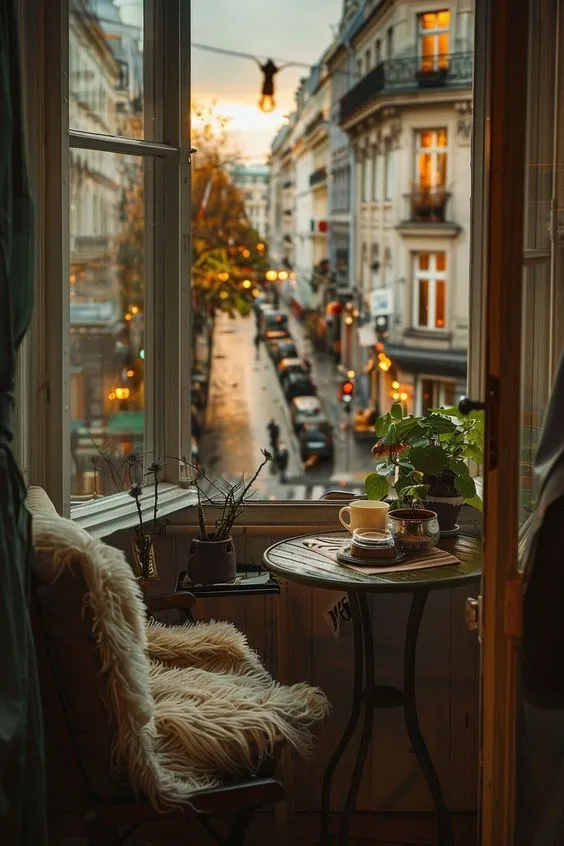
Photo: cozy apartment balcony abroad local neighborhood slow travel morning coffee, via i.pinimg.com
The first time I stayed somewhere for a full month instead of a rushed week, I almost didn't go. The math felt wrong. A month abroad sounds expensive — like something people with trust funds or remote CEO jobs do, not regular people with regular budgets trying to stretch their PTO.
But here's what I discovered: done right, slow travel can actually cost less than a frantic two-week sprint through five countries. And it almost always feels infinitely better.
If you've ever come home from a trip more exhausted than when you left — suitcase half-unpacked, jet lag hitting hard, already dreading Monday — slow travel might be exactly what your travel life is missing.
What Slow Travel Actually Means
The concept is simple: instead of moving fast through a lot of places, you move slowly through a few. Maybe just one. You stay long enough to find your rhythm — to discover the bakery around the corner that doesn't have a TripAdvisor page, to recognize the guy who walks his dog past your window every morning, to have a favorite table at a café where they eventually stop asking your order.
Slow travel is less about the destination and more about the quality of presence you bring to it. It's the difference between consuming a place and actually inhabiting it, even briefly.
For Americans used to the "do Europe in 10 days" style of travel — and I say this with full love because I have absolutely done that itinerary — it requires a genuine mindset shift. You're not here to see everything. You're here to see something well.
The Budget Case for Staying Longer
Here's the counterintuitive math that makes slow travel work financially.
When you move quickly, you pay premium prices constantly. Nightly hotel rates, daily tourist-area restaurant meals, transportation between cities every few days, last-minute booking fees. It adds up shockingly fast. A week in Paris moving around stays can easily run $250–$350 a night when you factor in central location, short-stay premiums, and the convenience tax of eating near every landmark.
When you stay a month in one place, everything changes:
Accommodation drops dramatically. Monthly rentals on platforms like Airbnb, Vrbo, or local Facebook housing groups are often 40–60% cheaper per night than weekly rates. A studio apartment in Lisbon, Porto, Medellín, or Chiang Mai — all popular slow travel destinations — can run anywhere from $600–$1,200 for a full month. That's less than three or four nights at a mid-range hotel in many tourist areas.
Food costs normalize. Once you have a kitchen, you shop at local markets. You cook some meals. You eat lunch at neighborhood spots where nobody speaks English on the menu — which is usually a very good sign. You stop paying the tourist markup on every single meal.
Transportation becomes minimal. You're not hopping trains or booking budget flights every few days. You walk. You take the local bus. You figure out the metro. These costs are negligible compared to intercity travel.
Choosing Where to Go
For Americans working with a real budget, the destination matters enormously. Slow travel in Switzerland will still be expensive slow travel. But there's a whole world of places where your dollars stretch beautifully.
Some consistently affordable and genuinely wonderful slow travel destinations right now:
- Mexico City — incredible food scene, walkable neighborhoods like Roma and Condesa, strong expat community, and relatively easy logistics for US travelers
- Medellín, Colombia — perennial favorite for slow travelers, great infrastructure, mild climate, and a vibrant local culture
- Porto, Portugal — slightly pricier than it was five years ago, but still very manageable, and the quality of life is exceptional
- Tbilisi, Georgia — one of the most underrated cities in the world right now, very affordable, and endlessly fascinating
- Oaxaca, Mexico — smaller, quieter, and deeply rich culturally — perfect if you want to genuinely slow down
The key is looking for places with a strong infrastructure for longer-term visitors. Good internet, a variety of accommodation options, accessible healthcare, and a local life that continues whether tourists show up or not.
Finding a Place to Actually Stay
Skip the hotel for anything longer than a few nights. For slow travel, you want a home base — ideally with a kitchen, a washing machine, and enough space to not feel like you're camping.
Beyond Airbnb and Vrbo, check:
- Facebook Groups — search "[city name] expats" or "[city name] housing" — locals and long-term residents often post monthly rentals that never make it to booking platforms
- Nomad List and community forums like r/digitalnomad for current recommendations and honest pricing
- Local real estate agencies — in some cities, showing up and renting directly for a month is entirely normal and often cheaper than any app
Always read reviews carefully, ask about the neighborhood rather than just the apartment, and if possible, book your first week in a flexible spot while you scout longer-term options in person.
The Mental Health Side of Slow Travel
This part doesn't get talked about enough in budget travel guides, but it matters.
Constant movement is genuinely taxing. The mental load of navigating a new city, new transportation system, new language, new social norms — every few days — is exhausting even when you're loving it. There's a specific kind of travel burnout that comes from never quite settling, never fully relaxing, always being in orientation mode.
Slow travel removes most of that friction. By week two somewhere, you're not a tourist anymore in the ways that matter. You know how to get around. You have a few spots you like. You've stopped translating every sign. That cognitive ease frees up enormous energy — for actual enjoyment, for creativity, for the kind of wandering that doesn't have an agenda.
You also just sleep better when you're not packing and unpacking every three days.
One Practical Thing to Do Before You Go
If you're American and working remotely — or thinking about requesting a work-from-anywhere arrangement — the logistics of slow travel become much more accessible. But even if you're using PTO, a month abroad is more achievable than it sounds if you're strategic about timing (shoulder season is your best friend) and destination.
Start smaller than you think you need to. A two-week slow travel experiment in one city will tell you everything about whether this style resonates with you — and it almost certainly will.
The goal isn't to see the whole world. It's to actually be somewhere, fully, for long enough that it starts to feel a little bit like yours.
That feeling? Worth every skipped landmark.